


 Guide
 February 18, 2026
Every social media marketer knows that TikTok operates on a very different set of rules than platforms like Facebook or Instagram. Understanding the complex network of interactions shaped by TikTok’s algorithm is crucial when aiming to grow a brand and analyze campaign results effectively. This article guides marketers through the real data that powers content success, clears up common misconceptions, and offers practical strategies for mastering brand engagement on TikTok.
Table of Contents
- Defining TikTok Data and Common Misconceptions
- Types of TikTok Data and Key Analytics
- How Data Drives Content Strategy and Performance
- Trend Tracking and Real-Time Campaign Optimization
- Collaboration, Privacy Risks, and Legal Concerns
- Mistakes to Avoid in Data-Driven TikTok Growth
Key Takeaways
| Point | Details |
|---|---|
| Understanding TikTok Data | TikTok’s data analysis requires a multifaceted approach, focusing on algorithmic metrics and user engagement rather than traditional social media metrics. |
| Holistic Analytics Strategy | Marketers should prioritize holistic engagement metrics and behavioral signals to adapt to TikTok’s dynamic algorithm. |
| Real-Time Optimization | Continuous monitoring of trends and audience interactions is crucial to effectively optimize campaigns on TikTok. |
| Navigating Privacy Concerns | Awareness of regulatory requirements and data privacy implications is essential for maintaining brand trust and compliance on TikTok. |
Defining TikTok Data and Common Misconceptions
Understanding TikTok data requires moving beyond traditional social media metrics. Unlike platforms that rely primarily on explicit user connections, TikTok’s data ecosystem centers around algorithmic content clustering and engagement patterns. Systematic research into TikTok’s data landscape reveals a complex network of interactions that challenge conventional social media understanding.
TikTok data fundamentally encompasses several critical dimensions:
- Content Characteristics: Video length, format, audio selections, visual effects
- User Interactions: Likes, comments, shares, watch time, replay rates
- Algorithmic Metrics: Recommendation frequency, content distribution patterns
- Behavioral Signals: User scroll speed, engagement duration, content preferences
Many marketers mistakenly view TikTok data through a linear lens, assuming direct correlations between content and engagement. However, the platform’s sophisticated algorithm creates intricate feedback loops that dynamically adjust content visibility based on nuanced user behaviors. Investigating misinformation and user perspectives demonstrates that TikTok’s data interpretation requires a multifaceted approach.
Pro Tip: Always track engagement metrics holistically, understanding that TikTok’s algorithm values complex interaction patterns over simplistic view counts.
Here’s a quick comparison of TikTok’s unique data ecosystem versus traditional social media analytics:
| Aspect | TikTok Approach | Traditional Social Media |
|---|---|---|
| Content Discovery | Algorithm-driven, interest-based | Follower network, chronological feed |
| Engagement Signals | Complex interaction clusters | Likes, shares, comments only |
| Personalization | Continuous real-time adjustment | Limited, slower algorithm updates |
| Data Complexity | Multidimensional and behavioral | Simple, static metrics |
Types of TikTok Data and Key Analytics
TikTok analytics represent a sophisticated ecosystem of data that goes far beyond traditional social media metrics. Comprehensive data collection frameworks reveal multiple layers of insights critical for understanding platform dynamics and user behavior.
TikTok’s key data types can be categorized into several primary dimensions:
- Content-Level Data
- Video duration
- Audio selections
- Visual effects
- Hashtag usage
- User Engagement Metrics
- Likes
- Comments
- Shares
- Watch time
- Replay rates
- Behavioral Analytics
- Scroll speed
- Interaction patterns
- Content preference signals
- User retention indicators
Technical analytics frameworks demonstrate that TikTok’s data collection goes beyond surface-level interactions. The platform’s algorithm continuously analyzes complex user behaviors, creating dynamic recommendation systems that adapt in real-time to individual user preferences and engagement patterns.
Understanding these data types requires a nuanced approach. Marketers and creators must recognize that TikTok’s data ecosystem is not just about quantitative metrics, but about interpreting complex behavioral signals that drive content visibility and user engagement.
Pro Tip: Develop a holistic analytics strategy that looks beyond raw numbers and focuses on understanding the intricate behavioral patterns driving TikTok’s recommendation algorithm.
How Data Drives Content Strategy and Performance
Content strategy on TikTok is fundamentally transformed by advanced data-driven insights that go far beyond traditional marketing approaches. Algorithm-powered recommendation systems continuously analyze user behaviors, creating dynamic pathways for content optimization and performance enhancement.
Key strategic data points that drive content performance include:
- Audience Interaction Metrics
- Engagement rates
- Watch time
- Interaction frequency
- Scroll pause duration
- Content Characteristics
- Video length
- Audio selection
- Trending hashtags
- Visual style
- Recommendation Algorithm Signals
- User preference patterns
- Content similarity clusters
- Interaction probability
- Viral potential indicators
Systematic literature reviews reveal that successful creators leverage these data signals to refine storytelling techniques, humor styles, and narrative approaches. The platform’s algorithm rewards content that demonstrates high user engagement and alignment with individual viewer preferences.
Successful content strategy requires continuous data interpretation. Creators must move beyond static metrics and develop a dynamic understanding of how their content resonates with specific audience segments, using real-time analytics to iterate and improve their approach.
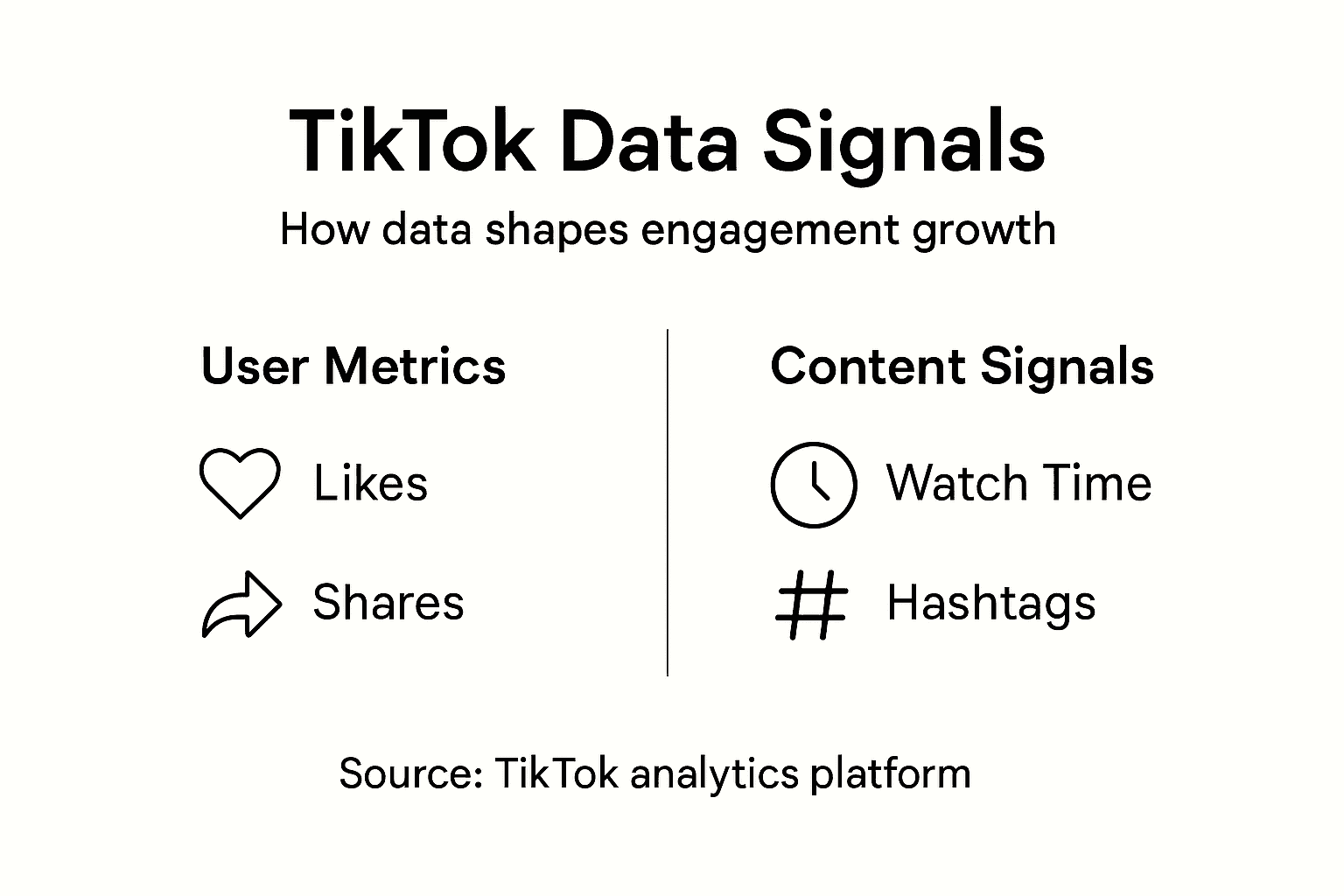
Pro Tip: Regularly analyze your content’s performance metrics and experiment with different storytelling techniques to uncover what truly drives audience engagement on TikTok.
Trend Tracking and Real-Time Campaign Optimization
Real-time campaign optimization on TikTok demands a sophisticated approach to understanding rapidly evolving digital landscapes. Machine learning trend identification enables marketers to dynamically adapt strategies based on immediate audience engagement signals.
Key strategies for effective trend tracking include:
- Emerging Trend Detection
- Hashtag popularity monitoring
- Sound and music trend analysis
- Viral challenge tracking
- Content style evolution
- Data-Driven Optimization Techniques
- Engagement rate analysis
- Audience demographic insights
- Content performance segmentation
- Rapid iteration cycles
- Algorithmic Adaptation Signals
- User interaction patterns
- Content recommendation clusters
- Virality potential metrics
- Temporal trend mapping
Successful trend tracking requires continuous monitoring and rapid strategic pivots. Marketers must develop agile frameworks that can quickly interpret and respond to the platform’s dynamic content ecosystem, understanding that TikTok’s algorithm rewards creators who can anticipate and align with emerging audience preferences.

The most effective campaigns leverage granular data insights, transforming trend tracking from a reactive process to a proactive strategy of audience engagement and content innovation.
Pro Tip: Implement a daily trend review process that combines algorithmic insights with creative intuition to stay ahead of emerging TikTok content waves.
Collaboration, Privacy Risks, and Legal Concerns
Navigating the complex landscape of TikTok requires a nuanced understanding of privacy implications and legal challenges. European regulatory perspectives775837_EN.pdf) highlight significant concerns about data protection, user consent, and potential cross-border regulatory complexities.
Key privacy and legal considerations include:
- Data Collection Risks
- User personal information tracking
- Third-party data sharing practices
- Geolocation data monitoring
- Algorithmic behavior profiling
- Regulatory Compliance Challenges
- GDPR adherence requirements
- International data transfer protocols
- Consent mechanism transparency
- Age verification standards
- Potential Collaboration Barriers
- Cross-jurisdictional legal frameworks
- State influence investigations
- Platform accountability mechanisms
- International data governance
Privacy policy analysis reveals substantial gaps in user data protections, emphasizing the need for robust, transparent governance mechanisms. Marketers and creators must remain vigilant about evolving legal landscapes that could impact their TikTok strategies.
Effective collaboration requires understanding these complex regulatory environments, recognizing that data privacy is not just a legal requirement but a fundamental trust mechanism between platforms, creators, and users.
Pro Tip: Regularly review and update your privacy settings, and maintain transparent communication with your audience about data usage practices.
Below is a summary of key privacy and legal considerations for TikTok marketers:
| Consideration Area | Example Risk | Business Importance |
|---|---|---|
| Data Privacy | Personal info misuse | Protects brand trust |
| Regulatory Compliance | Non-GDPR adherence | Avoids legal penalties |
| Third-Party Data Sharing | Unclear consent mechanisms | Ensures ethical practice |
| International Data Transfer | Uncertain jurisdiction rules | Maintains global campaign stability |
Mistakes to Avoid in Data-Driven TikTok Growth
Data-driven growth strategies on TikTok require sophisticated understanding and nuanced implementation. Critical research perspectives reveal several fundamental mistakes that can undermine even the most well-intentioned marketing efforts.
Common pitfalls in TikTok data strategy include:
- Algorithmic Misinterpretation
- Overreliance on surface-level metrics
- Ignoring contextual engagement signals
- Failing to understand recommendation dynamics
- Misreading audience behavioral patterns
- Content Strategy Errors
- Neglecting cultural content nuances
- Forcing viral trends inappropriately
- Inconsistent content quality
- Misaligning content with audience expectations
- Ethical and Methodological Mistakes
- Overlooking privacy considerations
- Insufficient data validation
- Ignoring platform-specific biases
- Lacking transparency in data usage
Emerging research methodologies emphasize the importance of adaptable, rigorous approaches to platform analytics. Successful creators recognize that data interpretation requires more than numerical analysis—it demands a holistic understanding of platform dynamics and audience behavior.
Navigating TikTok’s complex ecosystem means developing a sophisticated, ethical approach to data that goes beyond simplistic metrics and recognizes the platform’s intricate social and algorithmic landscapes.
Pro Tip: Develop a multi-dimensional data strategy that balances quantitative metrics with qualitative insights and maintains strict ethical standards.
Unlock Your TikTok Growth Potential with Data-Driven Tools
The article highlights the challenge creators and marketers face in decoding TikTok’s complex algorithm and interpreting intricate engagement patterns to truly unlock growth. Understanding behavioral signals, reaction metrics, and real-time trend dynamics is critical but can be overwhelming without the right tools. You need a solution that transforms these multifaceted data layers into clear, actionable insights that enhance content strategy and campaign performance.
At TikTok Tactics, we empower you to master TikTok growth by simplifying data interpretation and trend tracking. Our platform provides intuitive analytics, real-time trend alerts, and streamlined collaboration features designed to align perfectly with TikTok’s unique engagement ecosystem. Whether you want to optimize video content based on watch time and interaction clusters or stay ahead with emerging sounds and viral trends, we help you take control of your TikTok success.
Don’t let complex TikTok data hold you back. Visit TikTok Tactics now to explore our suite of tools built for creators and marketers ready to convert data into growth. Start transforming your TikTok strategy with expert insights and actionable analytics today and see how effortless TikTok engagement can become.
Frequently Asked Questions
How does TikTok’s algorithm influence content visibility?
TikTok’s algorithm uses complex engagement patterns to adjust content visibility dynamically. It analyzes various signals such as user interactions, scroll speed, and watch time to recommend videos tailored to individual preferences.
What are key metrics to analyze for TikTok engagement?
Key metrics for analyzing TikTok engagement include likes, comments, shares, watch time, scroll pause duration, and video replay rates. These metrics help understand how users interact with content and which videos resonate best.
How can creators optimize their content based on TikTok data?
Creators can optimize their content by reviewing audience interaction metrics, experimenting with trending hashtags, audio selections, and visual effects, and continually refining storytelling techniques based on real-time performance analytics.
What are common mistakes to avoid in TikTok data strategies?
Common mistakes include overrelying on surface-level metrics, ignoring the complexities of content engagement, neglecting privacy considerations, and failing to align content with audience expectations. A balanced approach that combines quantitative and qualitative insights is essential.

