


 Guide
 February 27, 2026
Launching a TikTok campaign often starts with more questions than answers. Defining your audience and setting specific goals can make the difference between accidental viral moments and intentional growth. For digital marketers and content creators ready to stop guessing, building a foundation of clear objectives and analytics-driven planning is key. This guide brings you proven steps and SaaS tools so you can confidently track, measure, and refine your TikTok efforts from the very first video onward.
Table of Contents
- Step 1: Assess Goals And Tool Setup
- Step 2: Produce Engaging Tiktok Videos
- Step 3: Optimize Content Using Saas Analytics
- Step 4: Verify Performance And Refine Strategy
Quick Summary
| Key Insight | Explanation |
|---|---|
| 1. Define Clear Goals | Establish specific, measurable objectives for your TikTok presence to guide content creation and tool selection. |
| 2. Create Engaging Videos | Focus on authentic storytelling and emotional resonance rather than self-promotion to capture audience attention in the first few seconds. |
| 3. Analyze Performance Regularly | Consistently track key metrics like watch time and engagement to fine-tune your content strategy based on what resonates with your audience. |
| 4. Refine Your Strategy Iteratively | Regularly adjust your content, posting schedule, and engagement techniques based on analytical insights to continuously improve performance. |
| 5. Avoid Vanity Metrics | Focus on meaningful metrics that drive actual business results, such as sales and website traffic, instead of just overall follower counts. |
Step 1: Assess Goals and Tool Setup
Before you create your first TikTok video, take time to define what success looks like for your account. This foundation determines everything that comes next, from the content you produce to the tools you use to track performance.
Start by answering these key questions about your TikTok presence:
- What is your primary goal? Are you building followers, driving traffic to your website, or spreading a specific message?
- Who is your target audience? Understanding your viewers helps shape content that resonates with them.
- What metrics matter most? Follower count, engagement rate, click-throughs, or video views?
- How often can you post? Consistency matters on TikTok, so be realistic about your content schedule.
Once you’ve clarified your goals, defining clear objectives ensures your efforts stay focused and purposeful. Your goals might shift later, but starting with clarity prevents wasted time and effort.
Next, select the tools that align with your goals. You need a way to schedule content, track analytics, and monitor audience engagement. Look for platforms that offer real-time performance insights and content calendar features. The right tools transform guesswork into data-driven decisions.
Choosing the right analytics tools allows you to measure what’s actually working. Track metrics like video completion rates, comment sentiment, and follower growth patterns. This data shows you exactly which content types drive results.
Here’s a summary of TikTok analytics tools and their business impact:
| Tool Feature | Function | Business Impact |
|---|---|---|
| Content Scheduling | Automates video posting times | Improves consistency and reach |
| Real-Time Analytics | Provides instant performance insights | Enables fast content optimization |
| Audience Monitoring | Tracks demographics and behavior | Informs message targeting |
| Engagement Tracking | Measures likes, comments, shares | Guides content refinement decisions |
Think of your setup as a three-part system: clear goals, a content schedule, and analytics visibility. When these three pieces work together, you move from hoping your content performs well to knowing it does.
Start with specific, measurable goals instead of vague aspirations. “Grow followers” is too broad. “Gain 5,000 followers in 90 days” gives you something to track.
Pro tip: Set up your analytics dashboard first, even before posting content. This lets you establish baseline metrics and spot trends from your very first video onward.
Step 2: Produce Engaging TikTok Videos
Creating videos that capture attention and drive engagement is the core of TikTok success. Your goal is to produce content that feels authentic and resonates emotionally with viewers, not content that screams for sales or attention.
Start by understanding what makes TikTok videos stick. You have roughly three seconds to hook your audience before they scroll away. That hook comes from visuals, sound, or an unexpected moment that makes people stop.
Here’s what effective TikTok videos share:
- Authentic engagement with your subject matter instead of obvious self-promotion
- Visual clarity that translates to small phone screens without distracting elements
- Emotional resonance that connects with your specific audience
- Pace and pacing that matches current trends and viewer expectations
- Sound design that complements your visuals and keeps people watching
When you create content, think about dynamic storytelling techniques that react to what’s happening in real time. This might mean responding to trending sounds, current events, or conversations your audience is already having. Don’t force trends into your content. Instead, find trends that align naturally with your message.

Production quality matters less than authenticity on TikTok. A phone-recorded video with genuine personality outperforms polished content that feels disconnected from reality. Focus on clear audio, good lighting, and stable footage over expensive equipment.
Avoid the mistake of turning your videos into advertisements. Authentic product engagement that blends entertainment with what you’re promoting performs significantly better than direct sales pitches. Show how you actually use or interact with what you’re creating content about.
Your first three seconds determine whether someone keeps watching. Make them count by opening with something visually interesting or a hook that creates curiosity.
Pro tip: Film multiple takes in one session and batch edit them later. This workflow cuts production time in half while keeping your content fresh and consistent.
Step 3: Optimize Content Using SaaS Analytics
Raw data from your videos means nothing without interpretation. SaaS analytics tools transform video performance numbers into actionable strategies that directly improve your next piece of content.
Start by identifying the metrics that matter most to your goals. If you want more followers, focus on watch time and completion rate. If you’re driving traffic, track click-through rates and link shares. Don’t track everything, just the metrics tied to your specific objectives.
Here’s what you should monitor consistently:
- Watch time shows how long viewers stay engaged with your videos
- Completion rate indicates whether your hook works and content holds attention
- Shares and saves signal that viewers found your content valuable enough to return to
- Comment sentiment reveals whether your audience responds positively or critically
- Traffic sources show which platforms drive viewers to your TikTok profile
Data-driven approaches to content optimization help you understand how recommendation algorithms distribute your content and adjust your strategy accordingly. When you identify patterns in what performs well, you can create more of that specific type of content deliberately.
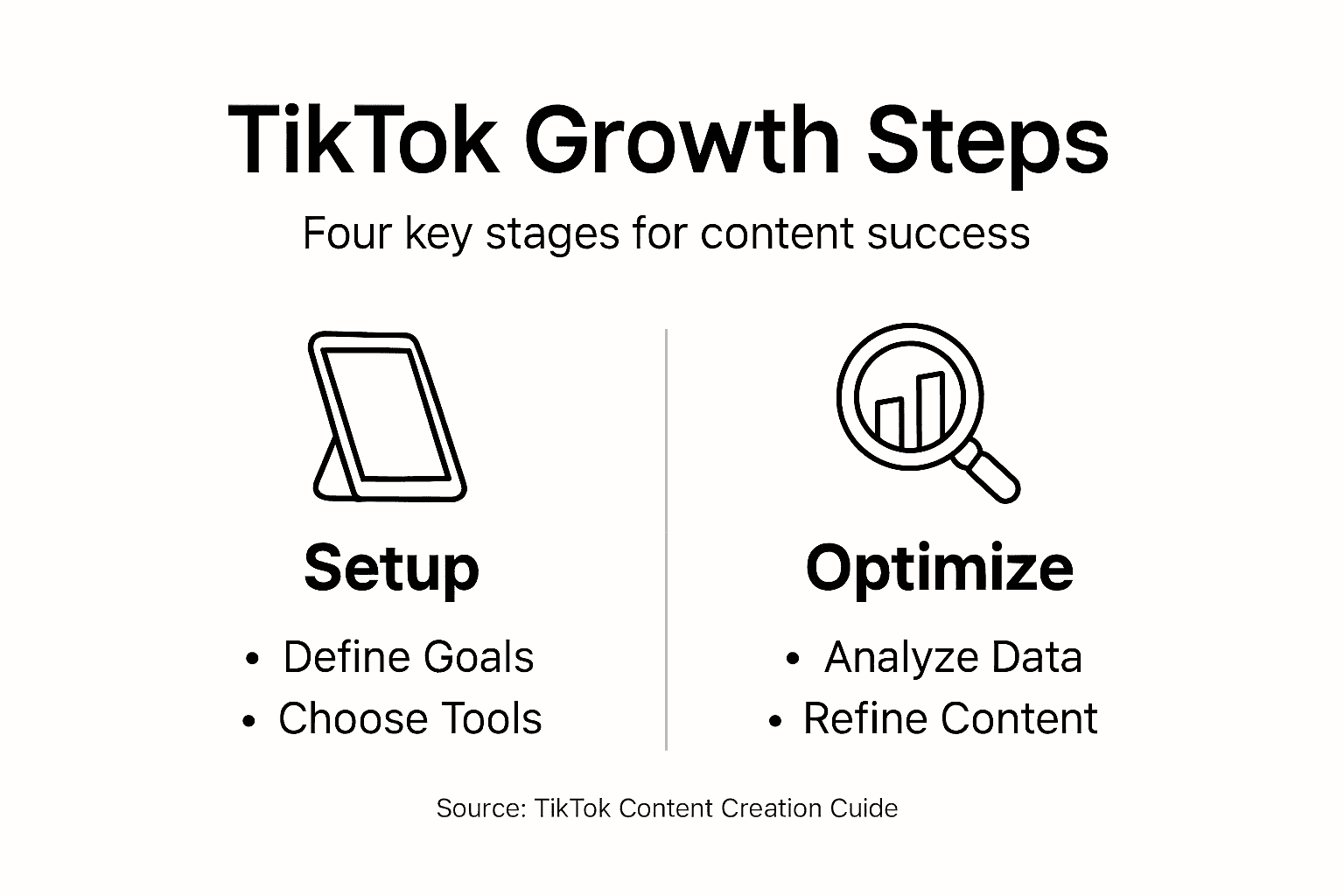
Make analysis a weekly habit, not a monthly event. Set aside 15 minutes each week to review your top three performing videos and your three worst performers. Ask yourself specific questions about each one.
Compare weekly and monthly analytics reviews for TikTok content:
| Review Frequency | Benefits | Drawbacks |
|---|---|---|
| Weekly | Rapid response to data trends | Can be time-consuming regularly |
| Monthly | Easier for teams to manage | Slower content improvement |
What did the top videos have in common? Was it the thumbnail, the sound, the posting time, the topic, or the video length? Did viewers watch all the way through, or did they drop off at a certain point?
Once you spot patterns, test your hypothesis with new content. If your audience engages highest with behind-the-scenes videos posted on Tuesdays at 6 PM, create more behind-the-scenes content on that schedule. Analytics tools provide actionable insights that help you refine posting schedules, content formats, and messaging based on real audience behavior.
Don’t chase vanity metrics like total follower count. Focus instead on the metrics that drive meaningful business results for you, whether that’s sales, website traffic, or brand awareness.
Your analytics dashboard is your content roadmap. The data shows you exactly what your audience wants to see next.
Pro tip: Create a simple one-page weekly report tracking your top 3 metrics. Share it with collaborators or reference it when planning next week’s content calendar.
Step 4: Verify Performance and Refine Strategy
Numbers tell part of your story. Real growth comes from reviewing what those numbers mean and adjusting your approach based on concrete evidence of what works and what doesn’t.
Verifying performance means moving beyond surface-level metrics to understand the full picture. Pull your analytics report and ask critical questions about each metric. Are you hitting the goals you set in Step 1? If not, why?
Here’s your verification process:
- Compare current performance against your baseline from 30 days ago
- Identify your top 3 performing videos and your bottom 3
- Look for patterns in topic, length, posting time, sound, or style
- Check whether engagement translates to your ultimate goal (followers, traffic, sales)
- Review qualitative feedback through comments and messages
Understanding how TikTok users engage with content goes beyond metrics. Read your comments. Do viewers ask questions, share personal stories, or tag friends? That’s engagement that drives algorithm visibility. Conversely, if comments are sparse or negative, your content messaging needs adjustment.
Now comes the refinement phase. Adjusting content based on quantitative data is an ongoing cycle, not a one-time fix. If your audience responds better to educational content than entertainment, shift your ratio. If Tuesday posts outperform Friday posts, reorganize your schedule.
Refinement might mean changing your posting frequency, adjusting your hashtag strategy, experimenting with new content formats, or targeting a slightly different audience angle. Make one change at a time so you can isolate what actually moves the needle.
Track your refinements. Document what you changed, when you changed it, and what happened to your metrics. This creates a personal playbook of what works specifically for your audience and niche.
Strategy refinement is iterative. You won’t get it perfect immediately. The creators who win are those who test, measure, adjust, and repeat consistently over months.
Your worst performing videos teach you more than your best ones. They show you exactly what to avoid.
Pro tip: Create a simple spreadsheet tracking your top 5 changes each month and their impact on key metrics. This historical data becomes invaluable when you need to decide your next strategic direction.
Many creators struggle because they rely on random posting rather than a structured workflow for ideation, filming, editing, and optimization. Developing repeatable systems is what turns TikTok from a trial-and-error platform into a predictable growth channel. For creators looking to accelerate this process, a Content Creation Course can provide practical frameworks around audience psychology, hook-driven storytelling, and analytics-based iteration, helping each video build on the performance of the last.
Unlock Your TikTok Growth Potential with the Right Tools
Struggling to turn your TikTok content into real growth and engagement? This guide highlights the importance of clear goals, authentic videos, and data-driven optimization to succeed on TikTok. But managing content schedules, analyzing performance metrics, and tracking trend shifts can quickly become overwhelming without the right support. If you want to stop guessing and start knowing what works for your audience, it is time to take action.
Discover how TikTok Tactics empowers creators and marketers with powerful SaaS tools designed specifically for TikTok content strategy. From real-time analytics and trend alerts to content calendars and team collaboration, our platform gives you the insights you need to optimize every video and reach your goals faster. Don’t wait to refine your strategy based on vague assumptions. Join thousands who use TikTok Tactics to transform raw data into meaningful growth. Take control of your TikTok success today.
Frequently Asked Questions
How do I define my goals for TikTok content creation?
To define your goals, identify your primary objective, such as growing followers or driving traffic to your website. Write your goals down in specific, measurable terms, like “gain 5,000 followers in 90 days,” to create a clear focus for your content strategy.
What tools should I use to track my TikTok performance?
Select analytics tools that offer features like content scheduling, real-time insights, and audience monitoring. Choose tools that allow you to see metrics such as engagement rates and video performance to make data-driven decisions quickly.
What elements make a TikTok video engaging?
An engaging TikTok video includes authentic storytelling, clear visuals, and resonant emotional connections with viewers. Start with a strong hook in the first three seconds, and ensure your content aligns with trends to maintain audience interest.
How often should I analyze my TikTok video performance?
Analyze your TikTok video performance weekly to quickly identify trends and patterns. Set aside 15 minutes each week to review your top three and bottom three performing videos to refine your content strategy effectively.
What should I do if my TikTok videos aren’t performing well?
If your videos aren’t performing well, evaluate their content and metrics to identify what isn’t resonating with your audience. Make one change at a time, such as adjusting your posting schedule or style, and monitor its impact on engagement and growth.
How can I refine my TikTok content strategy based on performance data?
Refine your content strategy by reviewing your analytics and identifying common elements in your top-performing videos. Adjust your content formats, hashtags, or posting times based on this analysis to enhance engagement and achieve your growth goals.

